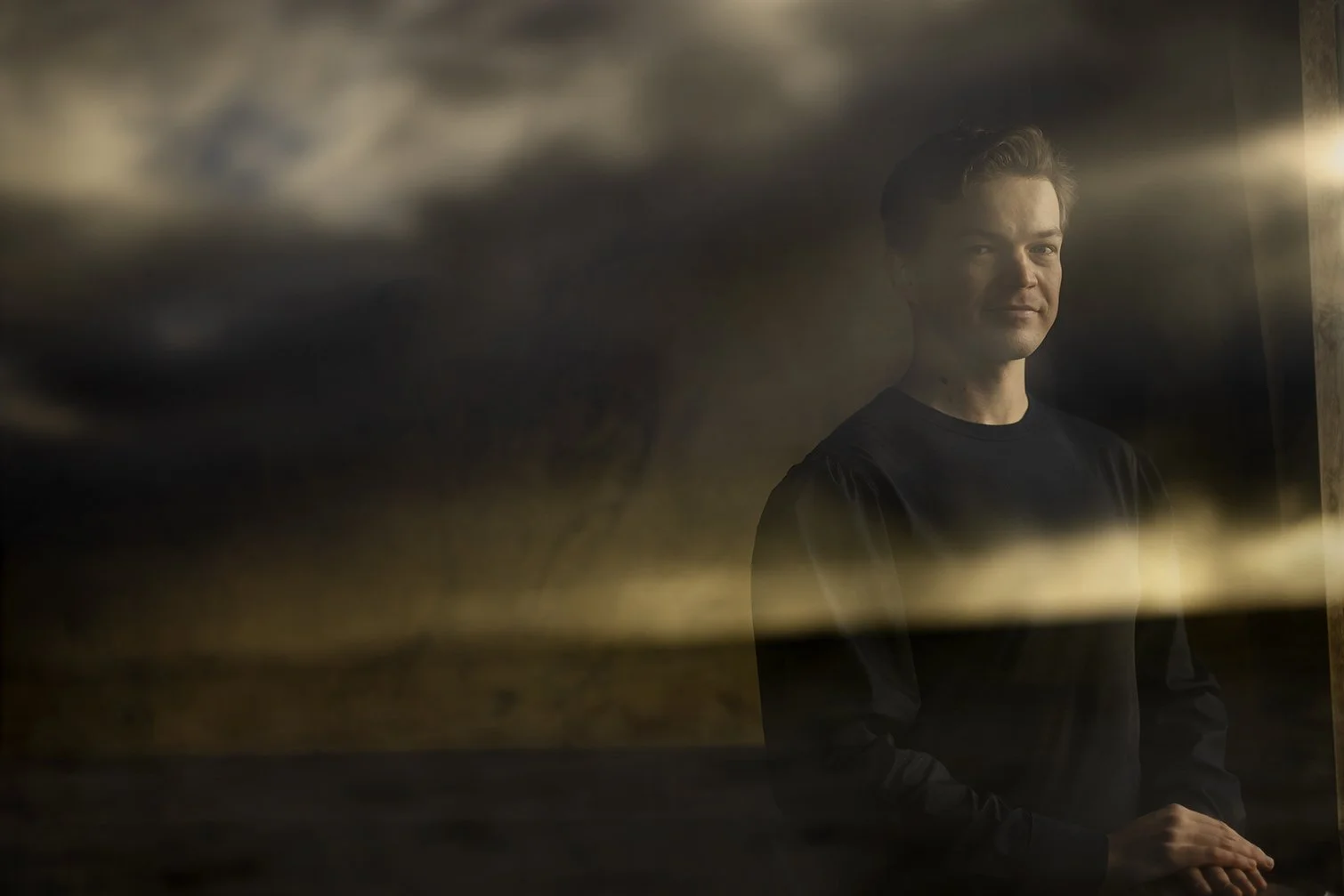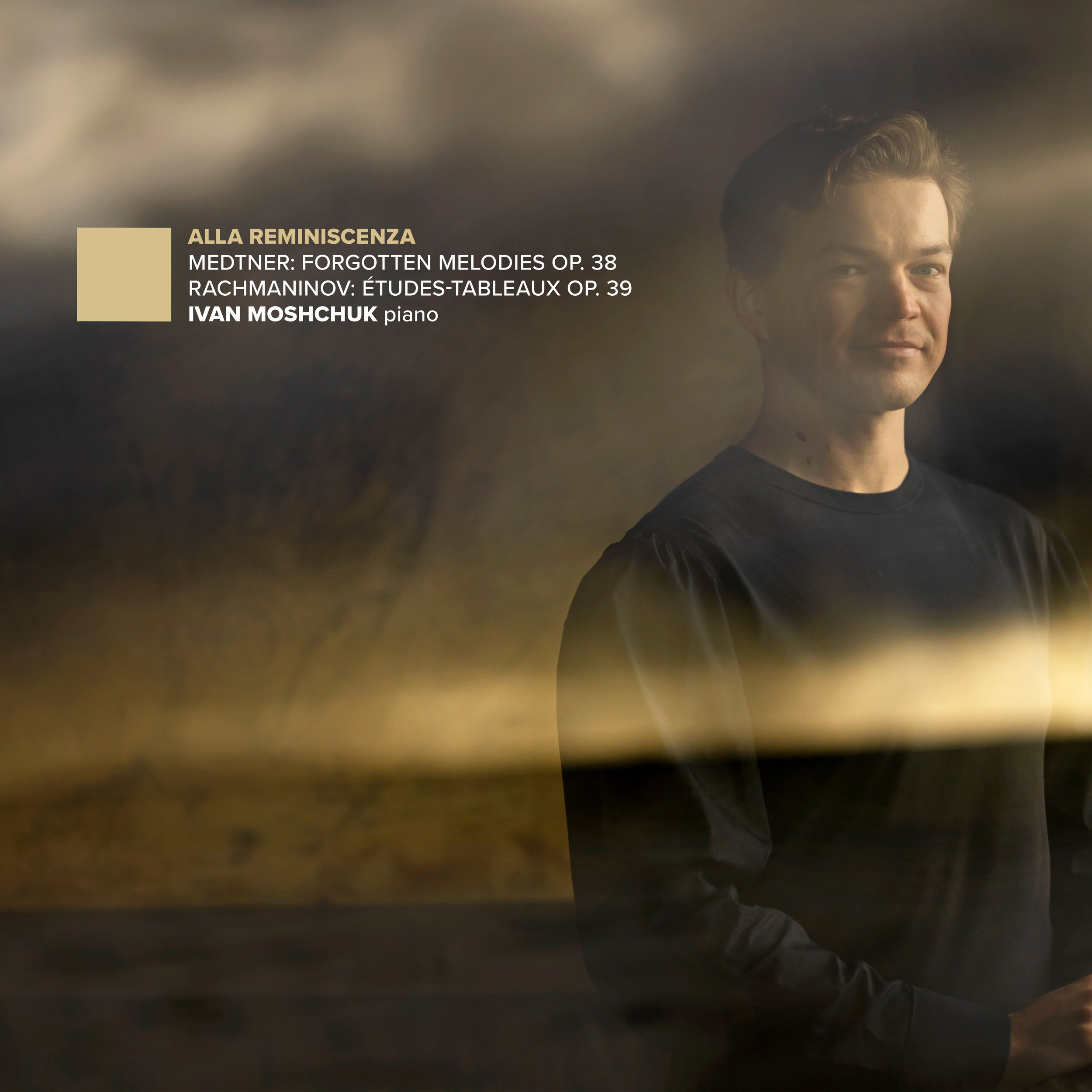
Alla Reminiscenza
music of Medtner and Rachmaninoff
Ivan Moshchuk, piano
-
Alla Reminiscenza examines the internal worlds of Nikolai Medtner and Sergei Rachmaninov through two landmark piano cycles: Forgotten Melodies, Op. 38, and Études-Tableaux, Op. 39. Conceived at the threshold of the 20th century, these works do not offer nostalgia for a vanishing world, but a path of resistance anchored in a unified acoustic axis. From Medtner’s non-linear, Goethean architecture to Rachmaninov’s visceral, Shakespearean dramaturgy, the album reconciles music composed on the tide of historical eclipse.
-
“Excellent sound and an impressive debut recital.”
— American Record Guide
“Fantastic clarity of articulation … and sheer beauty of tone.”
— BBC Music Magazine
“Moshchuk’s uncompromising approach is unparalleled … all of this rings out with such clarity and transparency, and with such a subtle palette of touch, that the purely pianistic delight is complete.”
— PIANO News (DE)
“An artistic style that combines a solid technique with an uncommon analytical sensitivity... pedal work is particularly refined, allowing a controlled resonance that never compromises polyphonic clarity.”
— Sonograma Magazine (ES)
“A masterclass in the maintenance of tone, obvious finger strength, and pedalling.”
— Fanfare
“Finds the precise sound and rubato to convey the introspective, intimate, and poetic character ... balancing technical demands with great expressiveness.”
— Ritmo (ES)
“Artistic heights that reveal a truly formidable pianist.”
— Scherzo (ES)
-
The Forgotten Melodies of Nikolai Medtner and the Études-Tableaux of Sergei Rachmaninov were conceived at the beginning of the 20th century. Several selections from these remarkable sets, such as Medtner’s Sonata-Reminiscenza and Rachmaninov’s fifth Étude-Tableau, have become landmarks of piano literature in their own right. Nevertheless, the further one absorbs this music, the more difficult it becomes to isolate a given piece. The collections begin to emerge as unified wholes and, despite their internal contrasts, possess a coherent dramaturgy and rhythmic reference point. There is a harmonic anchor: the foundational pillar of the key of A, the core acoustic axis upon which this particular program rotates.
To dwell upon the total social and political eclipse—the sheer violence of the historical abyss occurring at the time and place of composition—would be to invite a certain fatalism, and with it, the inevitable tropes of sorrow and nostalgia for a world shattered. In War and Peace, Tolstoy writes: 'Fatalism in history is inevitable for explaining irrational phenomena ... the more we try to rationally explain these phenomena in history, the more irrational and incomprehensible they become to us.' Tolstoy wrote this about the beginning of the 19th century; I reiterate these words at the beginning of the 21st. I do not wish to link this music to a specific time and place … [read more]
-
Recorded for Evil Penguin Classic
Recording, Mixing, & Mastering - Steven Maes, MotorMusic
Musical Director & Editing - Felicia Bockstael
Assistant Engineer - Tijs Wylin
Photography - Koen Broos
Design - Lucia Ghielmi
Recorded at Het Predikheren, Mechelen, Belgium
gallerY